|
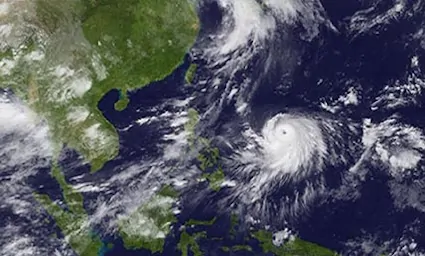
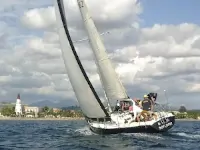
Photo by: John Ridsdel "Storm approaching Manila Bay"
|

|
|
Philippine Weather
|
|
|
Philippine weather and Puerto Galera weather for sailing has two distinct seasons: Northeast monsoon "Amihan" winds, from November to April; and, South West monsoon "Habagat" winds, from May to October. Tropical storms and typhoons (hurricanes / cyclones) may affect Philippine weather at any time of year but most frequently from April through to November.
Because the Philippines is so strategically located, at the boundary between the West Pacific and the South China Sea, and because routes around and through the Philippines are so important to global trade, Puerto Galera weather forecasts, Philippine weather forecasts and typhoon warnings are available through a myriad of different weather forecast sources, providing hourly, six hourly and daily weather forecasts & updates, including satellite imagery, weather charts and feeds from weather webcams.
|
Weather NOW
Get the actual Puerto Galera weather right-now-this-minute from Muelle Pier, where the Puerto Galera weather webcams located at Sharkeez Pizzeria & Internet Cafe:
QBE webcam
For more real-time Philippine weather webcams, some located along the Puerto Galera peninsula beaches, click here:
MyCam-Asia.tv
Get the Philippine weather picture from space - hourly infra-red satellite imagery for the Puerto Galera, Philippines, West Pacific and the South China Sea:
Kochi University, Japan
|
|
Typhoon WARNINGS
For typhoon warnings, the last known position, expected track and typhoon strike probability of current tropical storms in the West Pacific and the South China Sea we recommend:
Joint Typhoon Warnings Centre is the primary data source for typhoon warnings, typhoon strike probability and tropical storms tracking for the West Pacific and the South China Sea, used by almost all other typhoon warnings websites - we recommend you visit this source first;
NRL Monterey Marine Meteorology Division (showing typhoon-track graphics, strike probability the latest satellite picture of typhoons and tropical storms);
University of Hawaii (Global view of all active tropical storms, typhoons, hurricanes and cyclones, with strike probabilities);
and, Typhoon 2000 (interesting additional tropical storms link and typhoon archive)
Do you want to receive email TYPHOON WARNINGS for tropical storms and typhoons that may directly affect Puerto Galera and other popular Philippine water sports and sailing areas? Click this link and let us add you to our Philippine Tropical Storms/Typhoon Warnings email list.
|
Weather FORECASTS
For long range weather forecasts of active tropical storms in the Philippines you should visit the Tropical Storm Risk website, which offers predictions primarily for the purpose of insurance risk assessment but it is a useful resource for all.
Tropical Storm Risk
For combined, two day wave height/direction and wind direction/strength weather forecasts for more than fifty water sports locations around the Philippines we recommend:
Buoy Weather (then click on the red dot nearest to your location of interest)
For seven day weather forecasts of wind direction/strength, wave height, temperature and cloud, for Puerto Galera and 15 other Philippine windsurfing and water sports destinations, the WindGuru gives some pretty accurate weather forecasts at:
www.windguru.com
For another view of the wind direction/strength and wave height weather forecasts for the Philippines, the West Pacific and South China Sea, the Windfinder gives wind & water sports enthusiasts a colourful seven day weather forecasts at:
www.windfinder.com
Two weather forecast information sites that provide Philippine weather forecasts of particular interest to surfers and power boat owners, including wind speed, swell height & period weather forecasts:
www.magicseaweed.com and www.wetsand.com
For links to other information & weather forecasts relating to the Philippines, the West Pacific and the South China Sea try rummaging through:
www.weather.org.hk
|
Puerto Galera Weather
Puerto Galera weather for much of the year is influenced by micro climates resulting from the rapidly rising mountains that dominate the interior of Mindoro island.
During the northeast monsoon months the mountains of Mindoro create a distinct contrast in the weather between Puerto Galera's island beaches and peninsula beaches. Along the island beaches there may be rain clouds brewing in the mountains, casting intermittent shadows and the occasional sprinkling, at the same time as the peninsula beaches enjoy unlimited sunshine.
During the southwest monsoon the Mindoro mountains ensure that Puerto Galera's island beaches, the golf course and the mountain trails receive maximum rainfall to keep them lush and verdant. The peninsula beaches receive the minimum of rainfall and remain attractive as year-round Philippine holiday destinations, especially for scuba diving, snorkelling, sailing and windsurfing.
If you want the enjoyment of the beach and the sea with less direct sunshine then choose the popular islands beaches: White Beach, Aninuan Beach, Talipanan Beach. If you want to enjoy the maximum sunshine along the beaches then choose from the most popular peninsula beaches: Big Lalaguna Beach, Small La Laguna Beach, Sabang Beach and Sinandigan (Coral Cove); coincidentally the best scuba diving areas are located nearest to the peninsula beaches where you get the best light throughout the year.
|
Habagat / Amihan - What Is A Monsoon?
A Monsoon has a different name in each country that it affects. In the Philippines, the Summer (West or southwest) Monsoon is called the Habagat (ha-bag-at) and the Winter (North or northeast) Monsoon is called the Amihan (a-me-han). The word monsoon is believed to originate from the Arabic word mawsim (season), via the Portuguese and then Dutch monsun.
A "monsoon" is a consistent wind pattern generated by a large weather system, that lasts for a period of months and affects a large area of the planet.
The Summer Monsoon is a strong, generally West or southwest breeze that is responsible for bringing significant rainfall to the Asian subcontinent and to South and East Asia. The significant southwest monsoon rainfall is a by-product of air passing over large areas of warm equatorial ocean, stimulating increased levels of evaporation from the ocean's surface; the southwest monsoon air, now laden with water vapour, cools as it moves north and as it rises over land; at some point the air is no longer able retain its moisture and precipitates copious volumes to irrigate rice fields and drench rainforests, sometimes causing severe flooding. The Summer (West or southwest) Monsoon is the predominant weather pattern from late April through to early October each year, throughout most Asian tropical destinations.
The Winter Monsoon is generally a less strong, east or northeast breeze that is cool and dry compared to the Summer Monsoon, with prolonged periods of successive cloudless days. The Winter (North or northeast) Monsoon features cool and dry air that originates in a vast anticyclone - a weather system with a high barometric pressure - which forms over Siberia, Mongolia and northern China during each northern winter. The Winter Monsoon air from the anticyclone pushes outward in a clockwise motion from its centre and competes with the Summer Monsoon over a period of a week or two, usually starting in early October, before finally dominating the weather with a cooler and drier northeast monsoon, in most Asian tropical destinations, through to the following April.
There is no specific equivalent to a monsoon season in southern latitudes because there is no continent large enough to create the conditions similar to those that drive the alternate Winter Monsoon, as in the North. It could be said that the southern hemisphere is perpetually in varying degrees of Summer Monsoon condition; Brazil and parts of equatorial Africa are exceptions that show some seasonal differences.
|
back to top
|
|
|
Can't find what you are looking for here? Email: webmaster@pgyc.org
|
Copyright (c) 2003-2009 Puerto Galera Yacht Club; All Rights Reserved
|
|